


Have you ever wondered how long alcohol actually stays in your hair? Whether you’re facing a hair follicle test or just curious about how your body holds onto substances, understanding this can be crucial.
Unlike blood or urine tests that detect recent drinking, hair tests can reveal a much longer history of alcohol use. But what exactly happens when alcohol gets into your hair? And how long can it be detected? You’ll discover the science behind alcohol’s presence in your hair, the factors that affect detection time, and what it means for you.
Keep reading to get clear answers and practical insights that might just surprise you.
Alcohol In Hair
Alcohol can remain in your hair for weeks, making it possible to track consumption over time. Understanding how alcohol stays in hair helps explain the science behind hair tests. These tests detect specific markers formed when your body processes alcohol. Hair tests offer a longer detection window than blood or urine tests. The alcohol does not sit on the hair surface. Instead, it becomes part of the hair structure as it grows. This section explains the key markers and how alcohol enters the hair.
Ethyl Glucuronide (etg) Marker
Ethyl Glucuronide, or EtG, is a direct marker of alcohol use. Your body breaks down alcohol into EtG after drinking. EtG travels through your bloodstream and reaches the hair follicles. As hair grows, it traps EtG inside the hair shaft. This makes EtG a reliable sign of alcohol consumption. Hair tests measure EtG levels to detect drinking history. EtG can be found in hair for up to 90 days. This long detection period helps monitor long-term alcohol use. EtG testing is more accurate than older alcohol hair tests.
How Alcohol Gets Into Hair
Alcohol enters hair mainly through blood circulation. After drinking, alcohol spreads in your blood. Hair follicles receive nutrients and substances from blood. Alcohol metabolites pass into the hair cells during growth. These metabolites stay locked inside the hair shaft. Another way alcohol can appear in hair is through sweat and sebum. These fluids may carry small amounts of alcohol to the hair surface. Over time, alcohol mixes into the hair from the inside out. Hair growth speed affects how long alcohol stays detectable. On average, hair grows about half an inch per month. This growth captures a timeline of alcohol use in the hair strands.
Credit: miraclesasia.com
Detection Window
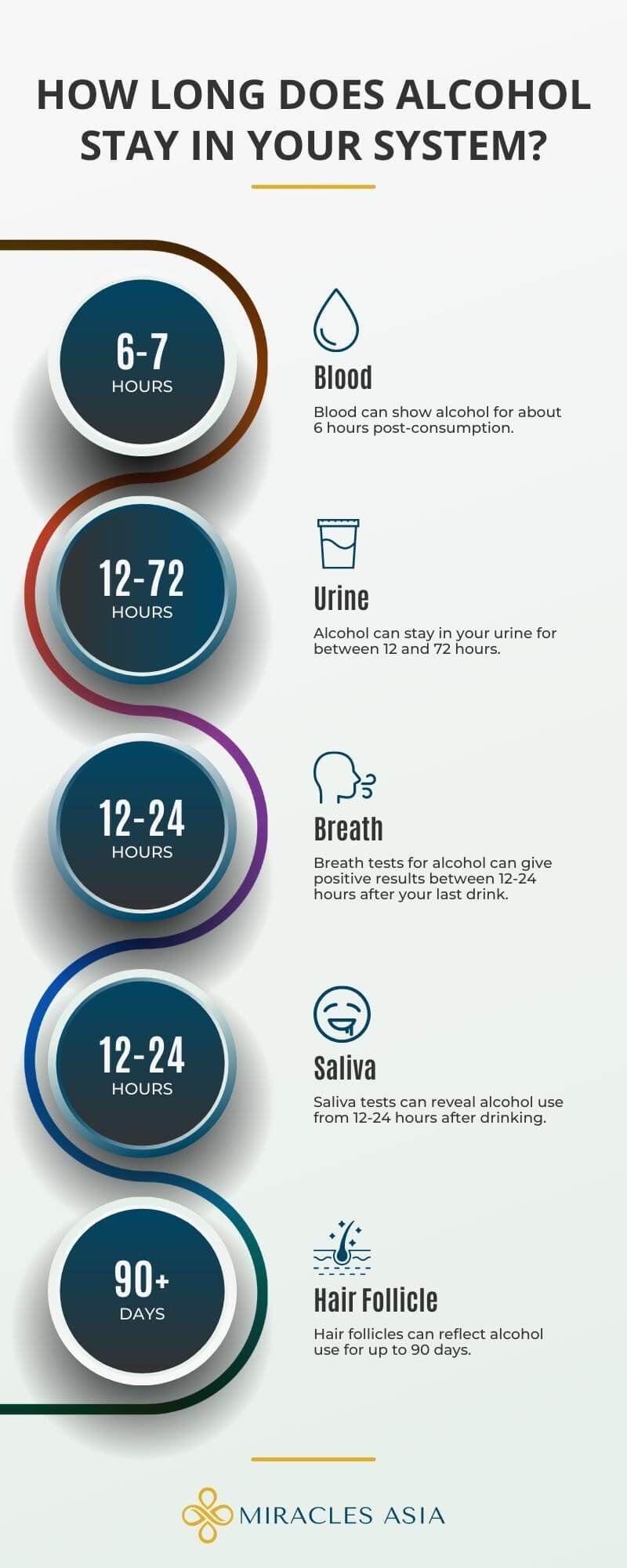
The detection window for alcohol in hair is unique compared to other testing methods. Hair testing reveals a longer history of alcohol use. This method tracks alcohol metabolites that enter the hair shaft. These metabolites remain as the hair grows, creating a timeline of consumption.
Time Lag For Detection
Alcohol does not show up in hair immediately. It takes about 5 to 7 days for alcohol metabolites to reach the hair surface. This delay occurs because hair grows slowly from the follicle. Testing can only detect alcohol in hair that has emerged above the scalp.
Duration Alcohol Stays In Hair
Alcohol metabolites can stay in hair for months. Typically, hair tests detect alcohol use up to 90 days back. The exact duration depends on hair length. Longer hair holds more history of alcohol consumption. This makes hair tests valuable for monitoring long-term use.
Testing Methods
Testing methods reveal how long alcohol stays in your hair. These methods detect alcohol markers embedded in hair strands. They provide a longer detection window than blood or urine tests. Understanding these methods helps clarify how results are gathered and interpreted.
Hair Follicle Testing
Hair follicle testing examines a small hair sample near the scalp. This test looks for traces of alcohol use over weeks or months. It is non-invasive and hard to cheat. The hair sample is cleaned to remove surface contamination before analysis.
Metabolites Detected
The main metabolites detected are Ethyl Glucuronide (EtG) and Fatty Acid Ethyl Esters (FAEEs). These substances form when the body breaks down alcohol. They get trapped inside the hair shaft as it grows. Detecting these metabolites indicates alcohol consumption over time.
Comparison To Other Tests
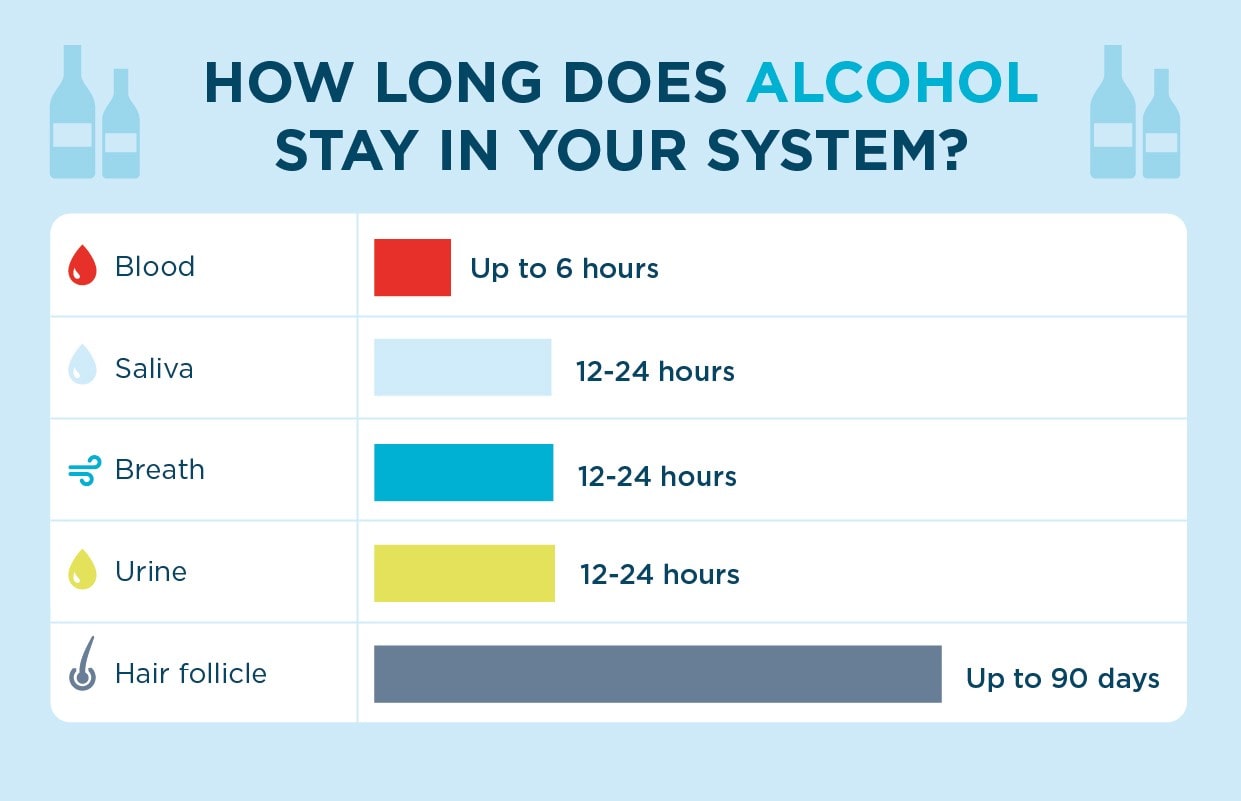
Hair tests detect alcohol use over a longer period than blood or urine tests. Blood and urine tests show recent use, usually hours to days. Hair tests can reveal alcohol use up to 90 days. They are preferred for monitoring long-term drinking habits.
Influencing Factors
Several factors influence how long alcohol stays in your hair. These elements affect detection times and test accuracy. Understanding them helps explain variations in test results across individuals.
Hair Length And Growth Rate
Hair length plays a key role in alcohol detection. Longer hair records alcohol use over a more extended period. Hair grows about half an inch per month. Faster growth may push alcohol markers out sooner. Short hair provides a shorter detection window.
Use Of Hair Products
Hair products affect alcohol presence in hair tests. Shampoos, conditioners, and dyes can alter test outcomes. Some products contain alcohol, which may interfere with results. Frequent use of alcohol-based sprays can mimic alcohol use. Specialized tests look for specific alcohol metabolites to avoid confusion.
Individual Metabolism
Metabolism speed influences how alcohol enters hair. People with faster metabolism break down alcohol quicker. This process changes how much alcohol gets into hair follicles. Body weight and health also impact metabolism. These differences cause variations in alcohol detection in hair.
Common Uses
Alcohol testing in hair offers a unique way to track alcohol use over weeks or months. This method detects specific alcohol metabolites embedded in the hair strand. It helps professionals understand long-term drinking habits rather than recent use. Various fields use hair alcohol testing to ensure safety, support recovery, and enforce legal rules.
Legal And Court Cases
Courts often require hair alcohol tests for cases involving alcohol use. These tests provide evidence of drinking history over time. Judges use this information to decide on custody or sentencing. The test results can influence bail conditions or child custody agreements. Hair testing helps prove or disprove claims about alcohol use in legal matters.
Treatment Programs
Treatment centers use hair alcohol tests to monitor patients’ progress. The tests show if someone follows their sobriety plan. Therapists rely on this data to adjust treatment steps. It gives a clear record of alcohol intake between visits. Hair testing supports honest communication between patients and counselors.
Probation Monitoring
Probation officers use hair tests to track alcohol abstinence. The tests cover a longer period than urine or blood tests. This helps detect any hidden drinking during probation. Officers use results to enforce probation terms strictly. Hair testing ensures people follow court-ordered sobriety rules.
Credit: www.priorygroup.com
Removing Alcohol From Hair
Removing alcohol from hair can be challenging. Alcohol and its metabolites, like EtG, get trapped inside the hair shaft. Simple washing may not fully clear these substances. Using specific methods can help reduce alcohol traces in hair. These methods focus on breaking down or removing alcohol compounds embedded in the hair.
Detox Shampoos
Detox shampoos contain strong cleansing agents. They help remove buildup and impurities from hair strands. These shampoos are designed to penetrate deep into the hair shaft. Regular use can reduce alcohol metabolites stored in hair. Look for detox shampoos with activated charcoal or clay for best results.
Bleaching And Dyeing
Bleaching breaks down the hair’s outer layer. This process can reduce alcohol markers in hair samples. Dyeing hair also alters the chemical structure of hair strands. Both methods may lower the concentration of alcohol metabolites. Frequent bleaching or dyeing can damage hair, so use caution.
Soaking Methods
Soaking hair in special solutions can help remove alcohol residues. Vinegar or detergent mixed with water can be effective. Soak hair for about 30 minutes to an hour. This loosens the substances inside the hair shaft. Rinse thoroughly afterward to avoid dryness or damage.
Frequent Washing
Washing hair often can reduce surface alcohol traces. Use warm water and a gentle shampoo. Avoid harsh shampoos that dry out your scalp. Frequent washing alone may not remove deep alcohol markers. Combine with other methods for better results.
Challenges In Removal
Removing alcohol from hair poses significant challenges. Alcohol markers become part of the hair structure. Simple washing often fails to eliminate these embedded substances. Understanding why removal is difficult helps explain testing accuracy and limits.
Embedded Alcohol Markers
Alcohol breaks down into metabolites like Ethyl Glucuronide (EtG). These metabolites enter the hair follicle during growth. Once inside, they bind tightly to the hair shaft. This embedding makes surface cleaning ineffective. The deeper the markers, the harder they are to remove.
Hair grows slowly, carrying these markers for weeks or months. Markers remain stable, resisting fading or washing out. This stability is why hair testing shows long-term alcohol use. Embedded markers provide a lasting record, not just a recent snapshot.
Limitations Of External Washing
Washing hair with regular shampoo removes surface dirt and oils only. Alcohol metabolites inside the hair shaft do not wash away easily. Specialized detox shampoos may reduce some markers but cannot remove all. Even multiple washes often fail to clear embedded alcohol completely.
Harsh treatments like bleaching or dyeing might lower metabolite levels. These methods can damage hair and affect test results. Vinegar or detergent soaks offer limited success and may not be practical. External washing methods have clear limits in removing alcohol from hair.
Hair Care Tips
Taking good care of your hair helps reduce the effects of alcohol exposure. Alcohol can dry out your hair and make it brittle. Proper hair care restores strength and moisture. Using the right products keeps your hair healthy and shiny. Follow simple steps to cleanse and nourish your hair effectively.
Clarifying Shampoo Use
Clarifying shampoos remove buildup from hair products and impurities. They help wash out residues, including alcohol traces. Use a clarifying shampoo once a week for deep cleaning. Avoid daily use to prevent extra dryness. Gently massage the scalp to boost circulation and cleanse hair roots.
Conditioning To Restore Moisture
Conditioners add moisture and repair damage caused by alcohol. Choose conditioners with hydrating ingredients like aloe or coconut oil. Apply conditioner from mid-length to hair ends. Leave it on for a few minutes before rinsing. Regular conditioning keeps hair soft and prevents breakage.
Test Reliability
Test reliability plays a crucial role in understanding how long alcohol stays in your hair. Reliable tests ensure accurate detection of alcohol use over time. This is important for legal, medical, and personal reasons. The science behind these tests involves advanced methods and strict protocols. These factors help reduce errors and false results. Knowing how these tests work adds confidence in their findings.
Lab Detection Techniques
Labs use precise techniques to detect alcohol markers in hair. The main focus is on ethyl glucuronide (EtG) and fatty acid ethyl esters (FAEEs). These substances form when the body breaks down alcohol. They get trapped inside the hair shaft as it grows. Techniques like gas chromatography and mass spectrometry identify and measure these markers. These methods are highly sensitive and specific. They can detect even small amounts of alcohol metabolites. This accuracy makes hair testing a trusted tool for monitoring alcohol consumption.
Risks Of Attempting To Alter Results
Some try to change test results by using shampoos or chemicals. These methods aim to remove or mask alcohol markers in hair. Most lab tests are designed to detect such tampering. Altering hair can damage its structure, which labs may notice. These attempts can lead to invalid or inconclusive results. In some cases, labs may report the test as positive despite efforts to cheat. Trying to alter results carries legal and personal risks. It is safer to rely on honest testing and clear communication.
:max_bytes(150000):strip_icc()/how-long-does-alcohol-stay-in-your-system-9b97d9617d6542009142dfb8f6d8da04.png)
Credit: www.verywellmind.com
Frequently Asked Questions
How Long Does It Take For Alcohol To Leave Hair?
Alcohol stays in hair as ethyl glucuronide (EtG) for about 1 to 3 months. Hair tests detect this metabolite. Removal is difficult since alcohol embeds in hair shafts over time. Regular shampooing and detox treatments may reduce levels but cannot fully eliminate alcohol markers quickly.
How Do I Remove Alcohol From My Hair?
To remove alcohol from hair, wash regularly with detox shampoos or clarifying shampoos. Bleaching or dyeing may reduce alcohol markers. Soaking hair in vinegar or detergent can help but results vary. Note that alcohol absorbed in hair shafts resists complete removal and may stay for months.
How Accurate Is The Hair Test For Alcohol?
Hair alcohol tests detect metabolites like EtG in hair, showing alcohol use over months. They provide accurate, long-term consumption evidence but can vary due to hair treatments and individual factors.
How Much Alcohol Will Fail A Hair Follicle Test?
Hair follicle tests detect ethyl glucuronide (EtG), showing alcohol use over weeks to months. Even small amounts may trigger a fail. No exact alcohol quantity guarantees passing. Frequent or heavy drinking increases failure risk.
Conclusion
Alcohol can stay in your hair for months after drinking. Hair tests detect alcohol metabolites like EtG inside hair strands. Longer hair shows a longer drinking history. Hair treatments might affect test results but not fully remove alcohol markers. Individual factors like metabolism also play a small role.
This method reveals alcohol use far longer than blood or urine tests. Understanding this helps when facing hair alcohol testing. Regular washing alone won’t clear alcohol from hair quickly. Specialized shampoos or bleaching may reduce markers but are not guaranteed.
Knowing these facts helps you make informed decisions about alcohol and testing.
As an Amazon Associate, I earn from qualifying purchases.
Lovingshe is a participant in the Amazon Services LLC Associates Program which is an affiliate advertising program designed to provide a means for sites to earn advertising fees by advertising and linking to Amazon.com. Amazon may use cookies to track referrals from our site. Visit Amazon’s privacy policy for details
